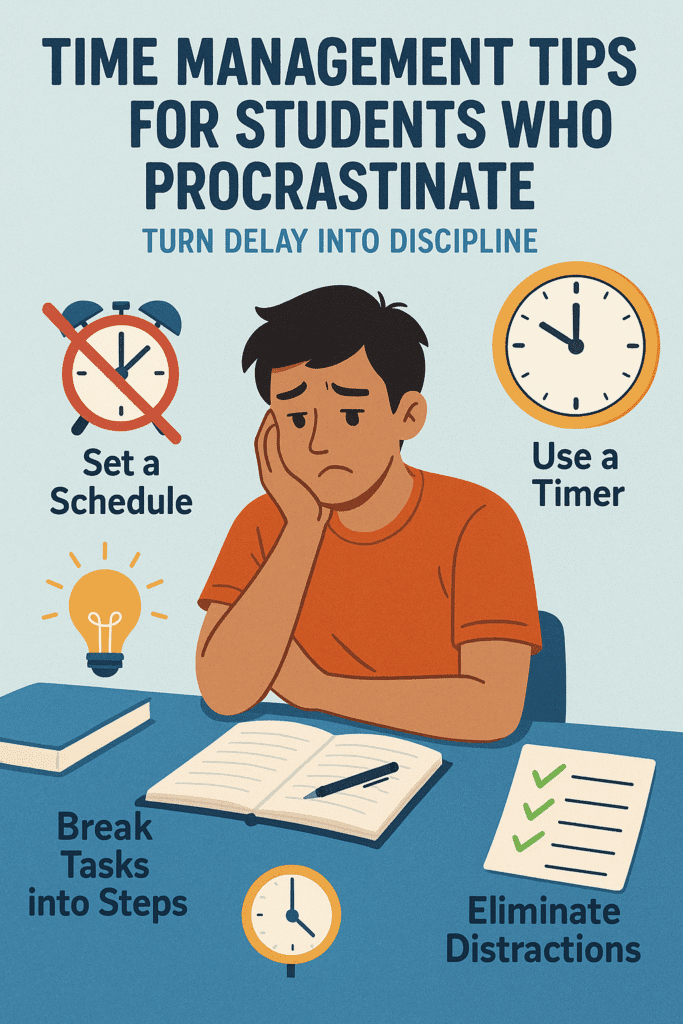

Time Management Tips for Students Who Procrastinate – Turn Delay into Discipline
“Time doesn’t slow down for anyone—but when you learn to walk with it, life begins to feel lighter.”
Every student has experienced that familiar scene:
Books open, exams approaching, but somehow you end up scrolling on your phone, watching “just one more reel,” or cleaning your room as if the future depends on it. Before you know it, hours have passed—and guilt arrives with the night.
This cycle is called procrastination, and it silently steals opportunities, marks, and peace of mind. But the truth is, procrastination isn’t a “problem with time”—it’s a conversation between your mind, motivation, and habits.
The good news? You can break this cycle gently, with awareness and the right strategies. Let’s explore time management tips for students who procrastinate—not with pressure, but with understanding, growth, and balance.
1. Start with a Mindset Shift: Be Kind to Yourself

Time management doesn’t begin with schedules—it begins with self-awareness.
Many students scold themselves for procrastinating, but guilt only pushes you further away from your goals. Instead, treat yourself like a student learning a new skill—because time management is a skill.
Try This Thought Shift:
Instead of thinking: “I waste so much time; I’m lazy.”
Think:
“I’m learning to manage my time better, step by step.”
When your mindset shifts from punishment to patience, change becomes easier.
2. Break Tasks into Small, “Non-Scary” Pieces

Procrastination doesn’t come from laziness—it comes from overwhelm.
When a task feels too big, your brain resists it.
The trick: Make tasks smaller than your resistance.
For example:
Instead of “Study Math for 2 hours”, break it into:
-
15 mins Algebra
-
15 mins Trigonometry practice
-
10 mins revision
Small tasks feel achievable, and finishing them gives the brain a dopamine boost that keeps you going.
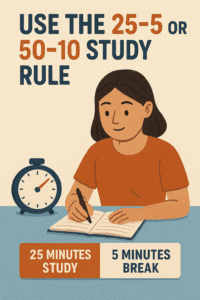
3. Use the 25–5 or 50–10 Study Rule
Your brain can’t focus for long stretches consistently. Structured study is more effective than long, unplanned hours.
Choose one based on your preference:
Pomodoro (25–5 Method)
-
Study 25 minutes
-
Break 5 minutes
-
After 4 cycles → 25–30 min break
Deep Focus (50–10 Method)
-
Study 50 minutes
-
Break 10 minutes
This helps both school and college students maintain focus without burnout.
4. Identify Your “Peak Productivity Hours”
Not all hours are equal.
Some students focus best early morning, others at night. Instead of forcing a routine, discover your natural rhythm.
Ask yourself:
“When do I feel most mentally fresh?”
Make that time your study goldmine—use it for the most important work.
5. Use the “Two-Minute Rule” for Quick Wins

This simple rule is a procrastination killer.
If a task takes less than 2 minutes, do it immediately.
Examples for students:
-
Keeping your study table clean
-
Sending notes to a friend
-
Drinking water
-
Replying to an important email
These small wins build discipline and prevent task-clutter in your mind.
6. Limit Digital Distractions (Without Quitting Your Phone)
You don’t need to throw away your phone—you need to control when it controls you.
Practical Digital Discipline Tips:
-
Put your phone in another room while studying
-
Use apps like Forest, Focus To-Do, or Notion
-
Turn off non-essential notifications
-
Replace late-night scrolling with calming music or reading
Remember: Your phone is a tool, not a time thief—when you stay in charge.
7. Plan Your Day the Night Before
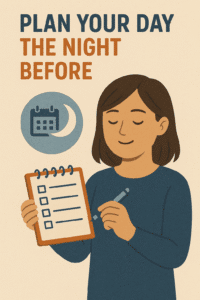
A day planned in advance flows more peacefully.
Each night, write only 3 important tasks for the next day.
Not 10—just 3. This reduces pressure and increases completion rate.
Format:
Today’s Top 3:
-
Study History Chapter 3
-
Complete Math worksheet
-
30 mins revision
Small lists create big consistency.
8. Use Visual Tracking to Stay Motivated
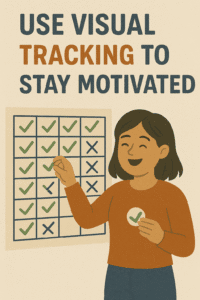
Your brain loves seeing progress.
Use:
-
Habit tracker apps
-
Sticky notes
-
Calendar checkmarks
-
A “Done List” (write what you completed today)
When students see proof of progress, they naturally reduce procrastination.
9. Reward Yourself (Without Guilt)

Discipline is not about pressure—it’s about balance.
After completing tasks, reward yourself with small pleasures:
-
20 mins of your favorite show
-
A snack
-
Music break
-
A short walk
Rewards train your brain to associate productivity with happiness—not stress.
10. Learn to Rest (Not Escape)

There’s a difference between resting and escaping.
Rest recharges your mind.
Escaping drains it further.
Rest examples:
-
Meditation
-
Walk
-
Stretching
-
Power nap
-
Talking to a friend
Escape examples:
-
Endless scrolling
-
Overthinking
-
Junk bingeing
-
Gaming for hours
Choose rest that heals.
11. Build a “Study Starter Ritual”

Your mind needs a cue to start studying. Create a small pre-study routine:
Example ritual (3–5 mins):
-
Clean desk
-
Fill water
-
Play focus music
-
Deep breathe for 30 seconds
This signals your brain:
“It’s study time now.”
12. Progress Over Perfection

Perfectionism often leads to procrastination.
You wait for the perfect mood, perfect place, or perfect plan before starting—but perfection is a trap.
Begin imperfectly. Improve as you go.
“Done is better than perfect, because perfection never starts.”
FAQs – Time Management Tips for Students Who Procrastinate
1. Top 10 time management tips for college students
-
Plan your day with top 3 priorities
-
Use Pomodoro or 50–10 method
-
Limit distractions
-
Stay organized
-
Break tasks into small steps
-
Sleep well
-
Study during peak focus hours
-
Track progress
-
Stay consistent
-
Reward yourself for completing goals
2. How to manage time for study daily?
Create a fixed study schedule, stick to small study blocks, avoid multitasking, and revise regularly. Consistency matters more than long hours.
3. Time management tips for students who procrastinate in school
Start with short tasks, use visual study maps, avoid distractions, and practice small daily routines that develop discipline over time.
4. Procrastination and time management for students
Procrastination is emotional resistance, not laziness. Time management works best when students combine mindset shifts, practical planning, and gentle discipline.
5. Time management skills
Essential skills include prioritizing, planning, organization, self-discipline, focus control, and the ability to balance rest with work.
Conclusion
Time management isn’t about squeezing more tasks into a day—it’s about aligning your energy, focus, and habits with what truly matters.
When you learn to approach your day with intention rather than pressure, procrastination slowly loses its power.
Start small.
Stay consistent.
Celebrate progress.
“Master time gently, and it will become your ally—not your enemy.”